
In autumn in Japan, you may see children in bright kimono at shrines, posing for family photos or carefully holding a long, thin bag. They may be celebrating Shichi-Go-San ("seven-five-three").
Shichi-Go-San is an occasion to give thanks for a child's growth so far and to wish for healthy growth ahead. Here we look at the name, when families visit shrines, and chitose ame candy. Detailed rules differ by shrine, so read the boxed examples as examples from one shrine.
What is Shichi-Go-San? A Japanese celebration of children's growth

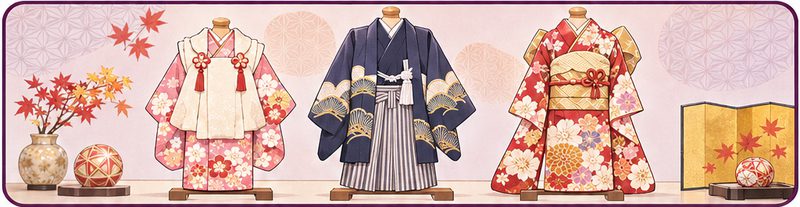
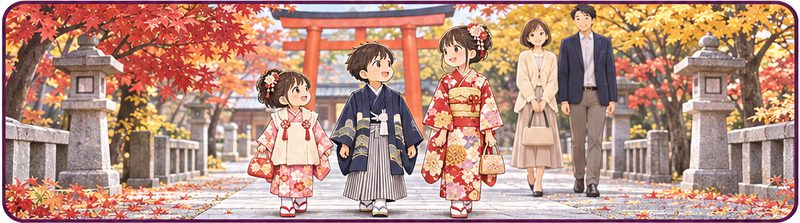
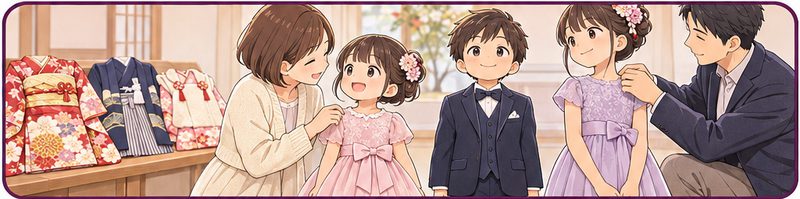
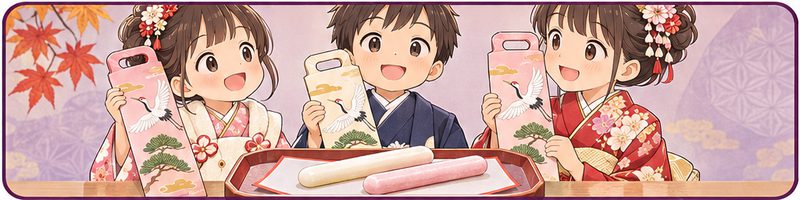

The people, clothes and shrine are original images made for this explanation. The family in the pictures is just an example; siblings do not need to celebrate at the same time. The illustrations are original images created by this site using generative AI.
"Shichi-Go-San" names the ages celebrated
The seven, five and three in the name refer to the ages celebrated. Akasaka Hikawa Shrine describes the shrine visit as a milestone rite in which three-year-old boys and girls, five-year-old boys and seven-year-old girls visit a shrine and pray for healthy growth.
| Age | Who is celebrated |
|---|---|
| 3 | Boys and girls |
| 5 | Boys |
| 7 | Girls |
Customs can differ by region and family. Check the guidance of the shrine you plan to visit and talk about what suits your family.
The origins: three rites marking growth
According to Santai Shrine, there are several theories about the origin, but Shichi-Go-San is said to come from three rites held at the imperial court in the Heian period.
- Kamioki: a rite said to have been held around the spring of age three. From then on, boys and girls began to let their hair grow, which had been shaved until then.
- Hakamagi: a rite in which a five-year-old boy wore a hakama, the formal wear of the time, for the first time.
- Obitoki: a rite celebrating a child who had worn a kimono with sewn-on ties starting to wear a kimono tied with an obi, like adults.
In times when medicine and hygiene were less developed than today, a child's growth was a great joy for the family. Giving thanks and making wishes to the deities at ages three, five and seven led to today's Shichi-Go-San.
Only on November 15?
The best-known date for Shichi-Go-San is November 15, but shrine visits are not limited to that day.
Booking periods and methods differ by shrine, so check the official guidance of the shrine you plan to visit.
Example from one shrine
Akasaka Hikawa Shrine says November 15 is the usual day, but many families now choose a day close to the 15th. Both Akasaka Hikawa and Santai Shrine offer Shichi-Go-San prayers throughout the year.
Two ways of counting age
Shichi-Go-San guides use two ways of counting age. Based on the National Astronomical Observatory of Japan's calendar notes:
- Mannenrei (age in full years): you are 0 at birth and get one year older on each birthday.
- Kazoedoshi (the traditional count): you are 1 at birth and get one year older each New Year.
So the same "age three" can mean a birth year one year apart, depending on the count. When you read a shrine's age chart, check which way of counting it uses.
Example from one shrine
In Akasaka Hikawa Shrine's age chart for 2026, the age-three celebration is for children born in 2023 by full years, or born in 2024 by the traditional count. The shrine notes that more families now celebrate by full years.
Is a kimono required?
Kimono are common at Shichi-Go-San, but Western clothes are also an option. Santai Shrine says children usually wear either Japanese clothing or formal Western clothing. There are no rules for the rest of the family, and the shrine suggests dressing to match the child.
If you choose a kimono, renting is an option as well as buying. When preparing an outfit, check the child's height and shoe size and which accessories are included in a set. Whether the child can be comfortable for the day matters too.
The wishes in long chitose ame
The long, thin candy seen at Shichi-Go-San is chitose ame ("thousand-year candy"). According to Santai Shrine, the word "chitose" and the long shape carry wishes for the child's long life and continued growth. It is not just a photo prop but a sweet with a celebratory meaning.
Whether chitose ame is included in the items given after the prayer differs by shrine.
Example from one shrine
Akasaka Hikawa Shrine includes chitose ame in its Shichi-Go-San items. Yoyogi Hachimangu says chitose ame is not included; in November it is sold at the shrine office until it runs out.
Things to check when planning a visit
If you are planning a visit for the first time, checking these points with the shrine makes preparation easier.
- Whether the prayer needs a booking
- Reception days and times, and the prayer fee (hatsuhoryo)
- Whether there is a place to dress, or information on kimono rental
- Photo rules on the grounds and during the prayer
- What items are given, such as chitose ame
Photo rules differ by shrine too. If you plan family photos or a hired photographer, check the official guidance first.
Example from one shrine
Akasaka Hikawa Shrine asks visitors not to take photos inside the shrine buildings, and allows photos in front of the main hall only for 15 minutes after the prayer.
Once you know about Shichi-Go-San, the kimono and chitose ame you see at autumn shrines also show the family's wishes for the child's growth.
Shichi-Go-San items on this site
Chitose ame and photo props
Hair ornaments
Kimono rentals
- Hifu set for 3-year-old girls (rental)
- Haori and hakama for 5-year-old boys (rental)
- Kimono set for 7-year-old girls, 14 pieces (rental)
For kimono rentals, check the day of use, the delivery day, the return day and what the set includes on each product page and the shop's guidance.
Product pages on this site include Rakuten Affiliate advertising links.
Sources
- 赤坂氷川神社「七五三詣」(in Japanese)
- 産泰神社「七五三」(in Japanese)
- 代々木八幡宮「七五三」(in Japanese)
- 国立天文台 暦計算室「暦Wiki 年齢」(in Japanese)
The sources were checked on November 10, 2026 (the National Astronomical Observatory page on November 11). Their content may be updated. This article is our own summary based on the public information in the sources.