
Once you find a warlord who interests you, why not bring that interest into your everyday life? Here, "oshi-katsu for warlords" means liking a historical figure, learning about them and visiting places linked to them. There are no fixed rules.
Oshi-katsu for warlords: how to enjoy it?

Read books, visit places linked to them... there are many ways to enjoy it.
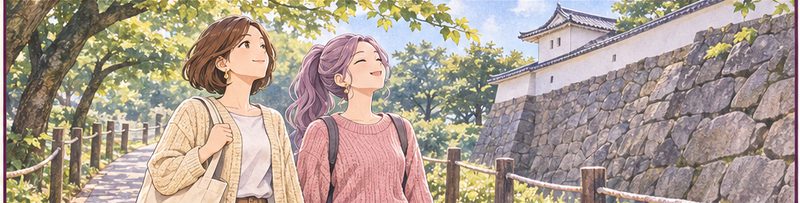
Before you go, check walking routes and entry information in official guides.
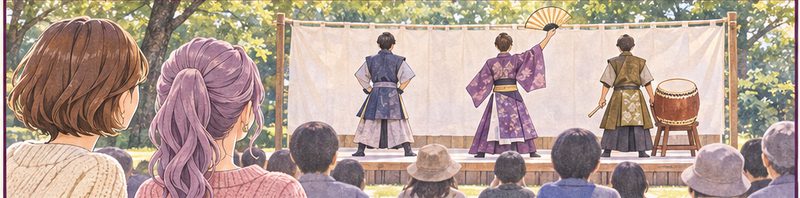
Check each group's latest guidance for performance days and photo rules.
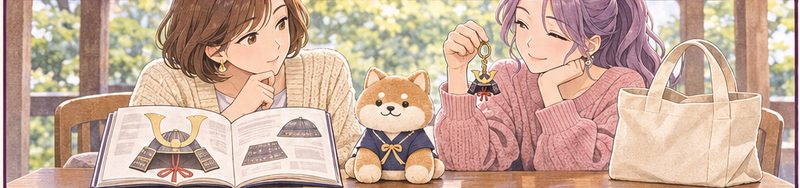
Let's enjoy historical records and today's designed goods as separate things.

Start from what you like, within your own comfort.
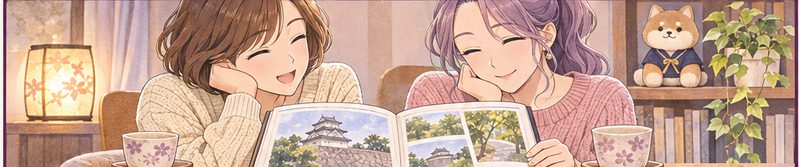
Learn, visit, keep things close. Enjoy it at a distance that suits you.
The comic is an illustration to explain ways to enjoy history. The characters, places and goods are fictional and do not reproduce any historical figure, historic site, warlord troupe or real product. The illustrations are original images made by this site using generative AI.
Plan from one place linked to them
Castles they used as bases and towns where they lived: history has ways in beyond books. Some, such as Odawara Castle, the Koriyama Castle site and the Takeda Clan Residence site, appeared in our articles.
But the words "a place linked to so-and-so" alone do not tell you how the place relates to the person. Did they build the castle, live there, or was it commemorated later? Reading one official explanation before visiting changes what you see there.
For example, Ueda Castle, linked to the Sanada family, was built by Sanada Masayuki. Its buildings and scenery today also reflect later revival by subsequent lords, towers moved back in modern times, and a rebuilt turret gate. Realizing that not everything from your favorite warlord's time remains as it was is part of the fun of seeing castles.
Things to check on your first historic-site trip
- Whether the place you want to see is open inside or only viewable from outside
- Whether the facility is open on the day you plan to visit
- Whether there are mountain paths or stairs, and whether the distance suits you
- Where you can and cannot take photos
This is our suggestion for planning a trip. Please check each facility's official information for actual visiting conditions. Rather than packing in many castle sites and museums, you can also start by taking your time at one place.
Meet a modern "busho-tai"
A busho-tai is a way to enjoy performances and hospitality based on history as modern entertainment. According to Nagoya City, Nagoya Omotenashi Busho-tai was formed in November 2009 with six warlords and four foot soldiers as PR ambassadors for the 400th anniversary of Nagoya's founding. They are based at Nagoya Castle.
The official site describes the "omotenashi enbu" performance as one that combines short plays cutting out a scene from history with sword fighting, dance and drums. Learning about historical figures and enjoying the performers' show are linked, but they are different ways of looking.
Check the schedule for content, not just names
Once you decide the day to visit, look at the schedule on the official site. Check which characters appear, the place, and whether there is a performance. The official FAQ says there are days without performances, and the warlords appearing, times and places may change without notice due to weather and other conditions.
Do not assume "I can meet everyone and see a performance whenever I go"; check the latest information on the day. The FAQ says you may take photos during performances but asks you to avoid capturing people other than the busho-tai. Enjoy photos and interaction following the rules on site and the staff's guidance.
Choose goods by what they are based on
Items with names or family crests, items with an armor motif, items combined with characters: goods based on history come in many forms. Looking at these three points before buying makes choosing easier.
- Who or what it is based on: a person's name, a family crest, a character from a work, etc.
- How you enjoy it: to display, to carry, to use every day
- How much it reproduces: a reproduction based on historical materials, or a modern creative design
Claims such as "a faithful reproduction of the armor he used" or "officially approved by a historic site or organization" are things to check for evidence. Do not judge by looks alone; read the product description.
Enjoy by carrying
A helmet keychain or a tote bag where you can choose a family crest is a way into everyday items. Check whether you can choose the person or crest you like, and whether the size suits what you usually carry.
Enjoy by displaying
If armor draws you in, a figure is one option. On this site we introduce figures based on Sanada Yukimura, Date Masamune, Kuroda Kanbei and Toyotomi Hideyoshi. Check that it fits where you will display it, including the size with its base. The figure's appearance is not meant as historical equipment as it was.
Enjoy through everyday tools
If you like the shape of swords, there are also everyday items with that design, such as katana-shaped scissors. Materials that reproduce weapons and tools that use a motif are different things. Check how to use and handle it, and choose by imagining when you would use it in daily life.
To carry
To display
- Sanada Yukimura Armor Figure
- Date Masamune Armor Figure
- Kuroda Kanbei Armor Figure
- Toyotomi Hideyoshi Armor Figure
To use every day
Product pages on this site include Rakuten Affiliate advertising links.
Keep "what I saw" and "what I learned" separate
After a trip or an exhibition, why not keep a short note along with your photos?
- The place you visited and the date
- Exhibits or buildings that caught your interest
- What you learned from the explanations, and the source
- What you felt, and what you want to look up next
This is also our suggestion for keeping the fun going. Separating "the exhibit said this" from "I felt this" helps when you read it again later. Where photos are not allowed, use notes or catalogs within what is permitted. Looking up words that caught your interest after you get home is also part of the trip.
Go back to the articles that interested you
Nobunaga, Hideyoshi and Ieyasu; Shingen and Kenshin; Ujiyasu and Motonari; Kanetsugu; Nobushige (Yukimura). Looking into regions through people opens ways into castles, daily life and today's events. In the ninja and Shinsengumi articles, we also showed that even when they sit on the same history-goods shelf, their roles and times differ. Starting from what looks alike and learning the differences is part of the fun.
Reread any article that interested you from the list of Sengoku warlord articles. Start with one place and one question. On days you buy goods and days you only read, enjoy Japanese history at the distance that suits you.
Sources
- 名古屋市「名古屋おもてなし武将隊」(報道発表資料)(in Japanese)
The sources were checked on November 10, 2026. Their content may be updated. This article is our own summary based on the public information in the sources.
Sources for the added sections
- 名古屋おもてなし武将隊「おもてなし演武」(in Japanese)
- 名古屋おもてなし武将隊 公式サイト「出陣表」(in Japanese)
- 名古屋おもてなし武将隊「よくある質問」(in Japanese)
- 上田城下町観光協会「上田城の歴史情報」(in Japanese)
The sources for the added sections were checked on November 19, 2026. Event programs, facility openings and product information may change.