
Series "Getting to Know Matcha and Japanese Sweets," part 4 of 5
In Japanese sweets aisles, you will find "dagashi," inexpensive snacks in small bags and boxes. In Part 3, we look at what to check on the package when choosing sweets, including dagashi.
Japanese dagashi and what to check on the package
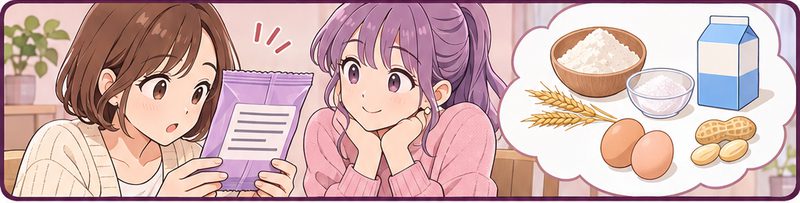
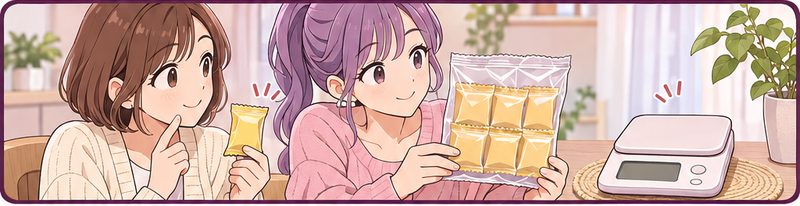
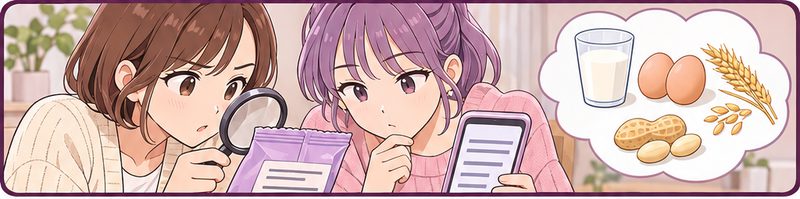


The food, packaging and labels are original images made for this explanation. The illustrations are original images created by this site using generative AI.
What to check on the package
| Label | What to check |
|---|---|
| Ingredients (genzairyo-mei) | What is used (for matcha sweets, whether sugar or milk ingredients are included) |
| Net contents (naiyoryo) | How many grams or pieces are inside |
| Allergy labeling | Whether it contains ingredients you need to avoid |
| Best-before date and storage | Until when, and how, to store it |
| Sales unit | Single item or a multi-pack (on Rakuten Ichiba, check the product page description) |
Date marks and allergy labeling
Japan has national systems for date marks and allergy labeling on food. The Consumer Affairs Agency publishes information pages on both. For food allergy labeling, "specified raw materials" that must be labeled are set, and the agency notes that cashew nuts were added to them on April 1, 2026.
If you have allergies, check the labels on the package and the sales page, and ask the maker or seller about anything unclear.
Related products on this site
In sets, date marks and labels may differ for each item. Please check each product page and the linked Rakuten Ichiba product page.
- Dagashi set of 55
- DIY candy kits, set of 10
- KitKat Koi Matcha
- Dagashi Treasure Box, 60 Kinds
- Umaibo, 10 Flavors x 5 Each (50 Sticks)
- Tirol Choco Random Assortment, 125 Pieces
- Baby Star Ramen Mini, 5 Flavors, 50 Bags
Product pages on this site include Rakuten Affiliate advertising links.
Sources
- 消費者庁「食品の期限表示に関する情報」(in Japanese)
- 消費者庁「食物アレルギー表示に関する情報」(in Japanese)
The sources were checked on November 6, 2026. Their content may be updated. This article is our own summary based on the public information in the sources.